Trump's Greatest Showman
The man who turned government violence into performance art, and what happened when the curtain finally fell.
We don't charge subscription fees for our content. We rely on the generous support of our readers to produce our independent reporting, free of corporate influence. Please consider supporting Field Notes Press to fund our continued independent journalism!
Prologue: The Movie in His Head
It's 1982 in the tiny town of Blowing Rock, North Carolina, nestled deep in North Carolina's High Country. An eleven-year-old boy named Gregory Bovino sits in front of the family television, transfixed on the film The Border: a Jack Nicholson film about corrupt Border Patrol agents running a smuggling operation on the Rio Grande. Where the filmmakers intended to portray a story of institutional rot, the young Bovino saw something else: an insult. The agents, in his mind the personification of law, order, and morality, were being made into the bad guys. It was a slight that he could not bear.
Decades later, now in charge of the largest domestic immigration enforcement operation in American history, Bovino would still invoke that childhood moment as the touchstone of his career — the moment a movie made him want to become a lawman. It's a revealing story, not because it explains what drove him to the Border Patrol, but because of how clearly it frames what he understood his role to be: the good guy. The hero. The protagonist in a story where the audience needed to understand, once and for all, the dichotomy of right and wrong.
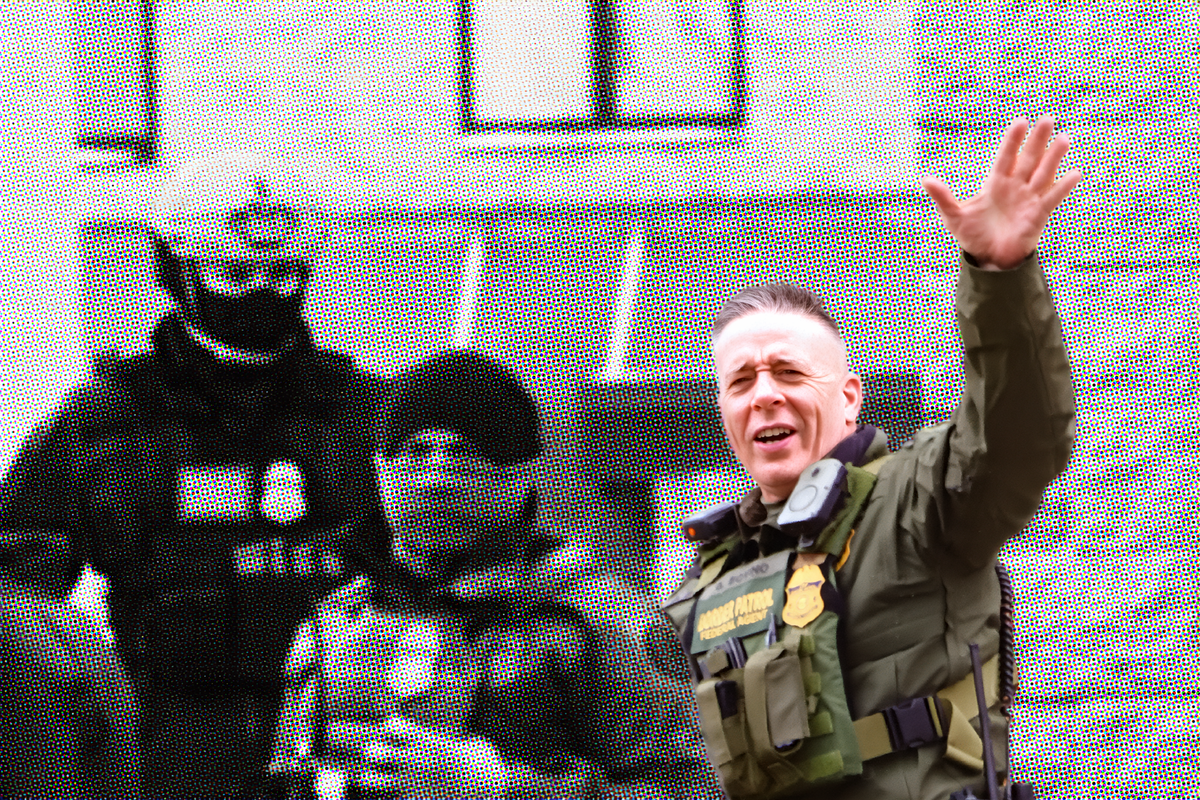
What Gregory Bovino became in 2025, however, was not quite what that eleven-year-old imagined. He became, instead, something stranger and more modern: a character in a different kind of production, one in which enforcement was inseparable from imagery, in which raids were staged for cameras, in which a federal law enforcement commander ran a social media account and soundtracked his own operational footage to Kendrick Lamar. He became, in the truest contemporary sense, a showman. Perhaps, in his mind, the Greatest Showman of an administration built on spectacle.
This is the story of how that happened — and how the show ended.
Act One: The Making of a True Believer
Gregory Kent Bovino was born a third-generation Italian immigrant on March 27, 1970, in San Bernardino, California. On his father's side, his great-grandfather emigrated from Calabria, an impoverished region at the toe of the Italian boot, to Pennsylvania's coal country in 1909. In 1927, his great-grandmother Luigia and their four children, including Gregory's future grandfather Vincenzo, continued the chain migration of the Bovino family to the United States, arriving in the country on the steamship S.S. Giuseppe Verdi. Vincenzo and his siblings would benefit from the United States' policy of derivative citizenship, with their mother Luigia later becoming a naturalized citizen.
Bovino's parents eventually moved to Blowing Rock, a small town in the Blue Ridge Mountains of North Carolina, where his father Michael owned the Library Club, a bar popular with locals. In 1981, when Gregory was eleven, Michael Bovino drunkenly crashed his truck into the car of Janie Mae Mitchell, killing her and seriously injuring her husband. In the aftermath, Michael would plead guilty to death by motor vehicle and serve four months in prison. After his release, a wrongful death lawsuit brought by Mitchell’s family would force the elder Bovino to sell the Library Club. His parents would divorce three years later.
It's a background worth sitting with: the grandson of immigrants who came through the system, shaped by a father's catastrophic failure and the family instability that followed, growing up in a rural Appalachian community far from the border he would spend his career policing. Joseph Sciorra, director of academic programs at the Calandra Italian American Institute at the City University of New York, put it plainly when reflecting on Bovino's later career: it was, he said, "astonishing to see a person whose grandfather was an immigrant engaging in such abhorrent and violent treatment of contemporary migrants."
Bovino himself has never appeared troubled by the irony. He graduated from Watauga High School in 1988, where he was a star wrestler, and then attended Western Carolina University, appearing on the dean's list in 1991. He participated in the university's ROTC Ranger team, a group modeled on the elite Army unit and defined by a culture of physical endurance and aggressive competition. A teammate, John VanHook, would later describe him simply: "Greg's not going to be backed down." He earned his bachelor's degree from Western Carolina in 1993 and a master's from Appalachian State in 1996.
The same year he graduated from Appalachian State, Bovino briefly joined the Boone, North Carolina Police Department. Then, inspired by autobiographies of former agents and still carrying that childhood grudge against Tony Richardson's film, he joined the United States Border Patrol in 1996 as a member of academy class 325. He was assigned to the El Paso sector and worked as an acting field operations supervisor in the tactical unit.
For the next two decades, he climbed the ranks with a profile that was noticed by his superiors but never made him famous. By 2008, he was an assistant chief at the Yuma sector. That same year, he was promoted to patrol agent in charge of the station in Blythe, California — and it was from that station, in 2010, that he first revealed the impatient, operationally aggressive character that would define him.
Act Two: A Pattern Takes Shape
From his post in Blythe, Bovino pitched an idea to his boss, Paul Beeson: agents from their office raiding the airport and bus stations in Las Vegas. Bovino's plan was approved but the operation, one that was supposed to last for three days, was called off after the first hour; the arrests it produced in that single hour were enough to trigger a furious political reaction from then-Senate Majority Leader Harry Reid, who was not consulted before the raids, and was immediately besieged by angry constituents. The operation was shut down before it properly began.
Beeson, who chose Bovino to lead stations in Blythe and later in Imperial Beach, California, described him in admiring terms: "He's not afraid to push the envelope, very articulate, leads from the front." The Las Vegas incident read, in that framing, not as a failure but as evidence of ambition briefly constrained by political reality. Bovino filed it away.
By August 2019, Bovino had become chief of the Border Patrol sector in New Orleans. By March 2021, he had moved to one of the agency's most significant postings: chief of the El Centro sector in California, which covers Imperial and Riverside counties along the southern border. He was relieved of that position in August 2023 under the Biden administration — partly due to social media posts deemed inappropriate, partly for an online profile picture showing him posing with an M4 assault rifle, and partly because of sworn congressional testimony he gave alongside other regional Border Patrol chiefs about conditions at the border during a record surge of migrants.
Thirty minutes after his second congressional hearing, Bovino said, he was asked: "Are you going to retire now?"
He didn't retire.
What he did instead was wait. During the Biden administration's final months, he found a new outlet. Operating from the El Centro sector, he led operations in the Central Valley of California that resulted in dozens of arrests. Unbeknownst to him, one of those operations, dubbed "Operation Return to Sender," would be an audition for a role that would lift him to national notoriety — and ultimately end his career.
Act Three: The Pilot Project
On January 7, 2025, the day after Congress certified Donald Trump's 2024 election victory but still technically during the Biden administration, Bovino dispatched more than sixty-five Border Patrol agents from El Centro, five hours north, into Kern County, California's agricultural communities. The operation swept through Bakersfield, stopping people at a Home Depot parking lot, outside a convenience store, and along a highway running between orchards.
At the time, Bovino said his agents had a "predetermined list of targets," many of whom had criminal records. "We did our homework" he said, touting the arrests of "two child rapists" on social media. His assistant chief patrol agent, David Kim, called it a "proof of concept" for how the Border Patrol could be mobilized far from the southern border. "Testing our capabilities, and very successful," Kim said. "We know we can push beyond that limit now as far as distance goes."
In the weeks that followed, both the factual and legal foundations of Operation Return to Sender crumbled. Border Patrol records obtained by CalMatters showed that agents had no prior knowledge of criminal or immigration history for 77 of the 78 people arrested. A federal judge later determined the operation likely hinged on stopping individuals without the reasonable suspicion of illegal presence required by the Fourth Amendment. The ACLU sued on behalf of the United Farm Workers union, arguing that the indiscriminate stops violated constitutional protections against unreasonable search and seizure. The judge assigned to the case issued a preliminary injunction.
Despite judicial intervention, Bovino was unrepentant. He did not acknowledge the constitutional findings as a check on his methods, but if at all, as an obstacle.
The New York Times would later characterize Operation Return to Sender as a test run for the nationwide operations that followed. An ACLU attorney put it more plainly: "I can't say what was going on in Greg Bovino's head, but I know what he has said about that raid. Which is that it was a pilot project. The problem is the policies that he was piloting were illegal and continue to be illegal."
The administration that inherited the pilot project didn't see it that way. They saw it as a proof of concept worth scaling up.
Act Four: The Audition
When Donald Trump returned to the White House in January 2025, Bovino's controversial profile picture with the assault rifle went back online. Within months, he was leading immigration enforcement in Los Angeles — the Trump administration's first sustained blitz of a major American city.
In June 2025, he was named the tactical commander of the Los Angeles operation, which ultimately produced more than 5,000 arrests and triggered protests across the city. The hallmarks were the same as the Kern County operation: day laborers swept up outside Home Depots, car wash workers snatched from their jobs across the city, garment workers violently abducted downtown, farmworkers corralled and arrested en masse in the strawberry fields of Oxnard. Stephen Miller had reportedly told immigration officials earlier that they didn't need targeted lists — they should just go to Home Depots. Bovino didn't need to be told twice.
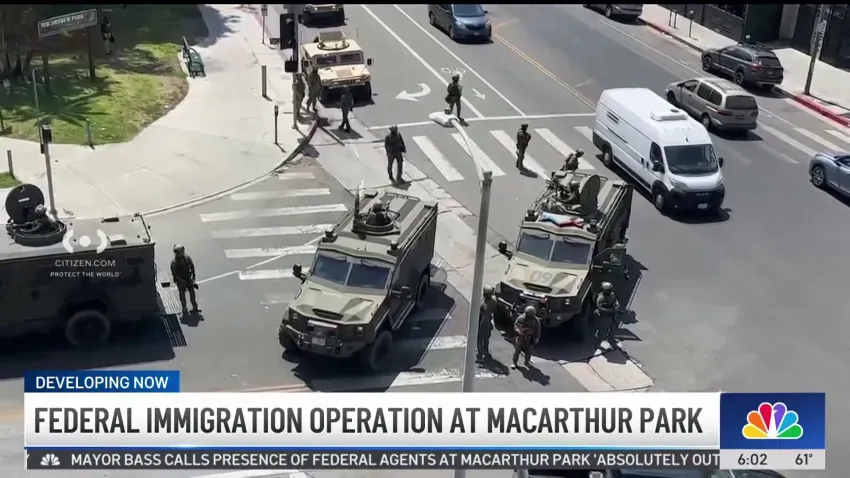
But the most dramatic and revealing moment of Bovino's Los Angeles operation was not a raid; it was what happened after a confrontation at MacArthur Park, the storied public green space in LA's Westlake neighborhood. In July, Bovino led a phalanx of federal immigration agents and military personnel into the park on foot and on horseback, forcing children to flee and enraging city officials. The imagery was visceral — armored military vehicles, soldiers under arms, helmeted federal agents on horseback, clearing a Los Angeles park where the community gathered and families played. The backlash was immediate.
Bovino's response was to produce a hype video.
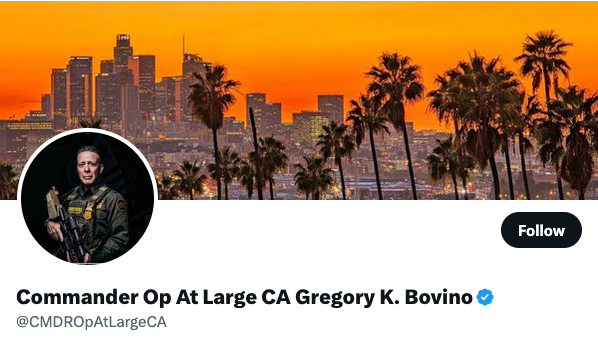
Soundtracked to Kendrick Lamar and set to footage from the operation, the video reframed the scene: Border Patrol agents as action heroes battling chaos, the park operation as triumph rather than provocation. His office posted it on his official Twitter account, which he ran as Commander Op At Large CA Gregory K. Bovino. "Still hard at work catching criminal illegal aliens in #LosAngeles," the post read. "We're not leaving until our mission is accomplished."
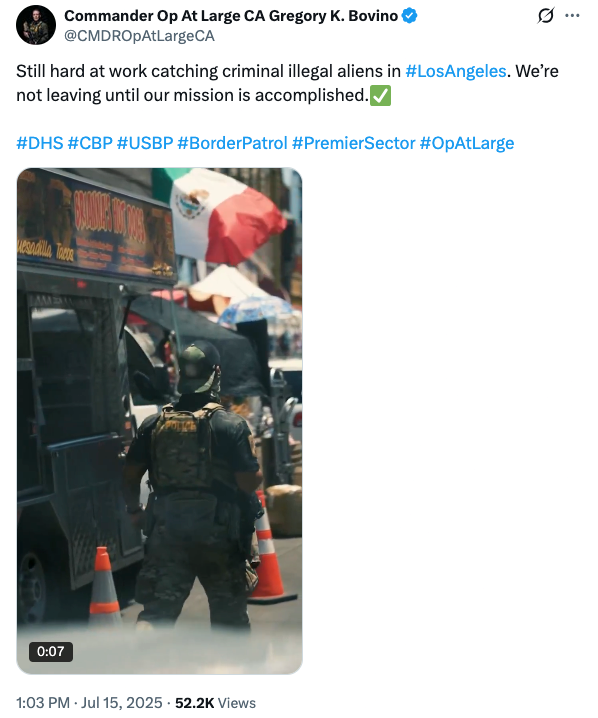
This was a new paradigm. Senior federal law enforcement commanders do not typically produce hype videos. They do not typically maintain personal-brand social media presences. But the MAGA media ecosystem rewarded the content, and the feedback loop was established. Bovino understood, perhaps better than anyone else in the Trump enforcement apparatus, that the show was the work. The arrests were the product. The footage was the distribution.
When Los Angeles Mayor Karen Bass criticized the operations, Bovino went to Fox News: "Better get used to us now," he said, "because this is going to be normal very soon."
Act Five: The Commander-at-Large
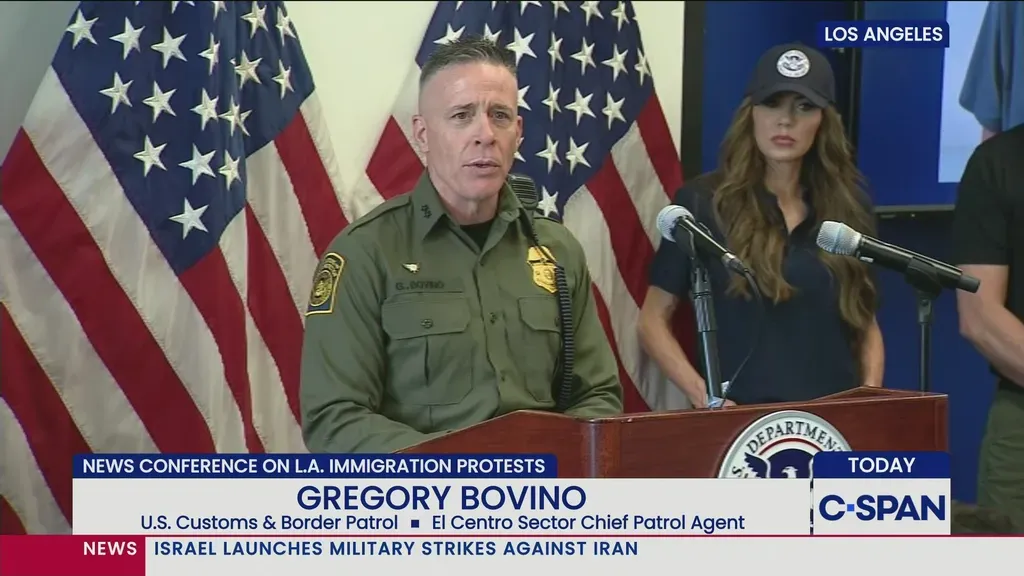
By October 2025, then-Secretary of Homeland Security Kristi Noem publicly announced a new title for Bovino: "Commander-at-Large" of the Border Patrol. It was a rank with no statutory basis; it did not exist in law, had no precedent in the agency's structure, and carried no defined chain of command. It was, in the most literal sense, an invented title.
In an email exchange that would later become public, Bovino clarified exactly where he saw himself in the hierarchy. When Todd Lyons, Director of Immigration and Customs Enforcement (ICE), asserted his own authority over interior immigration enforcement, Bovino corrected him in writing: "Mr. Lyons said he was in charge, and I corrected him saying I report to Corey Lewandowski." Corey Lewandowski, Trump's former campaign manager and political operative with no law enforcement background, had taken an advisory role with Noem and became Bovino's direct report in the chain of command related to matters of interior immigration enforcement. He operated, in his own accounting, outside the Border Patrol's established structure, reporting directly to political appointees.
This was, structurally, a remarkable arrangement. A career federal law enforcement officer, leading the largest domestic enforcement operation in the agency's history, accountable not to the directors of ICE or Border Patrol, not through the normal chain of command, but to a campaign operative. The title "Commander-at-Large" described, with accidental precision, the actual situation: a commander "at large" — untethered, operational, and political.
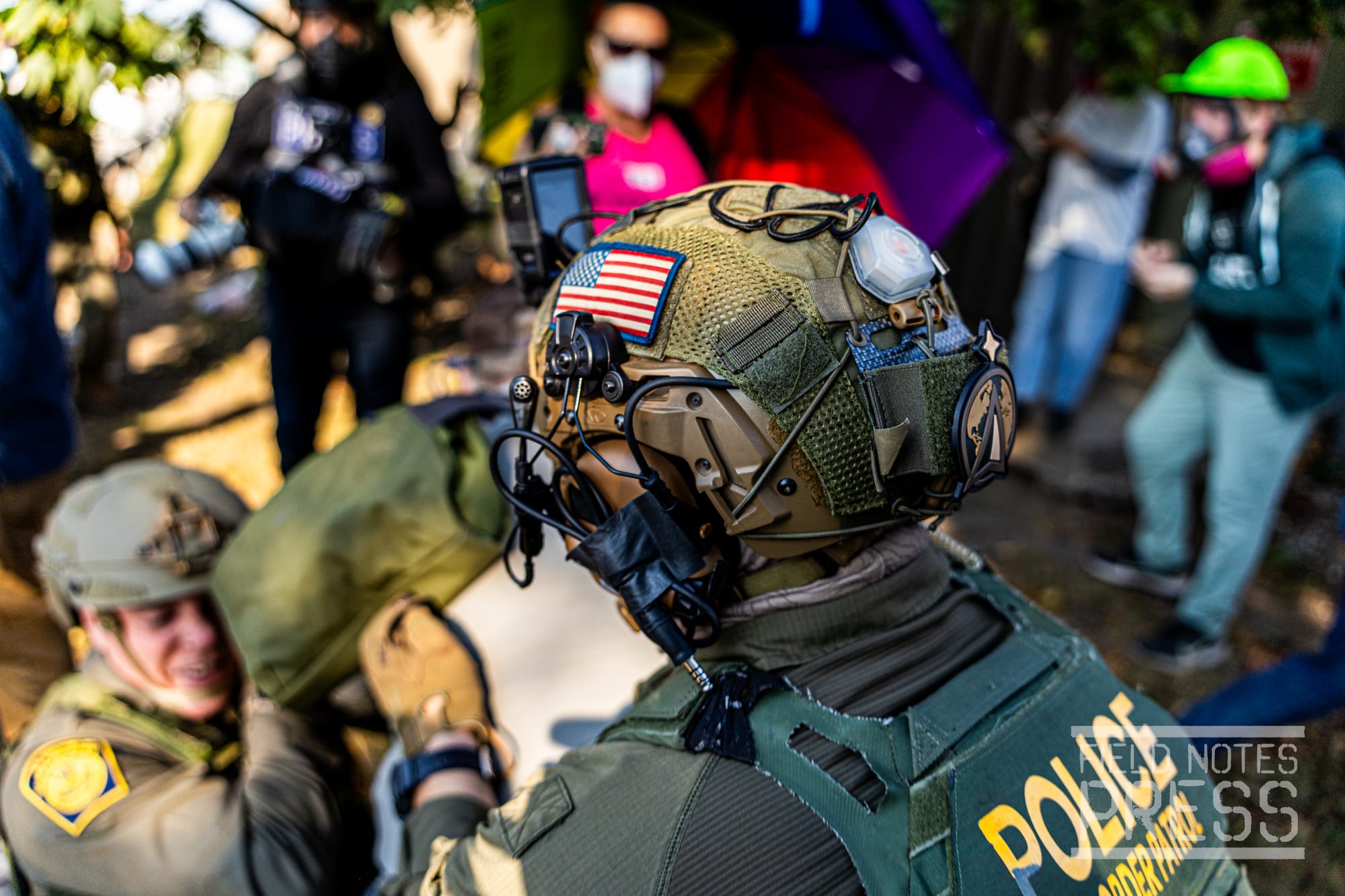
By this point, leaving the chaos and violence of Los Angeles in his wake, Bovino shifted to Chicago to command "Operation Midway Blitz", cycled through Charlotte and Raleigh North Carolina, and was preparing for an assault on New Orleans. Each city followed the same template: he would arrive with an operation name, a press conference, and a media strategy. The raids would sweep up whoever was in proximity — day laborers, landscapers, construction workers. The footage would go out. The numbers would be announced. The cameras would follow him through the streets. And then he would move on.
One former ICE official, speaking to Newsweek, offered a pointed assessment: "Bovino wants to build a brand, a name for himself, like I'm a fucking tough guy."
Act Six: Chicago
Chicago was where Bovino's self-titled "Green Machine" apparatus began to break down.
Operation Midway Blitz deployed hundreds of agents into Chicago and Illinois beginning in early September 2025. The raids swept through neighborhoods on the South and West sides. Agents stormed an apartment complex, rappelling from Black Hawk helicopters, deploying chemical agents near a public school. A Chicago City Council member was handcuffed at a hospital. And while Bovino and his surrogates asserted that they were targeting the Venezuelan gang Tren de Aragua, only two of the 37 immigrants arrested in the helicopter raid were confirmed to be gang members.
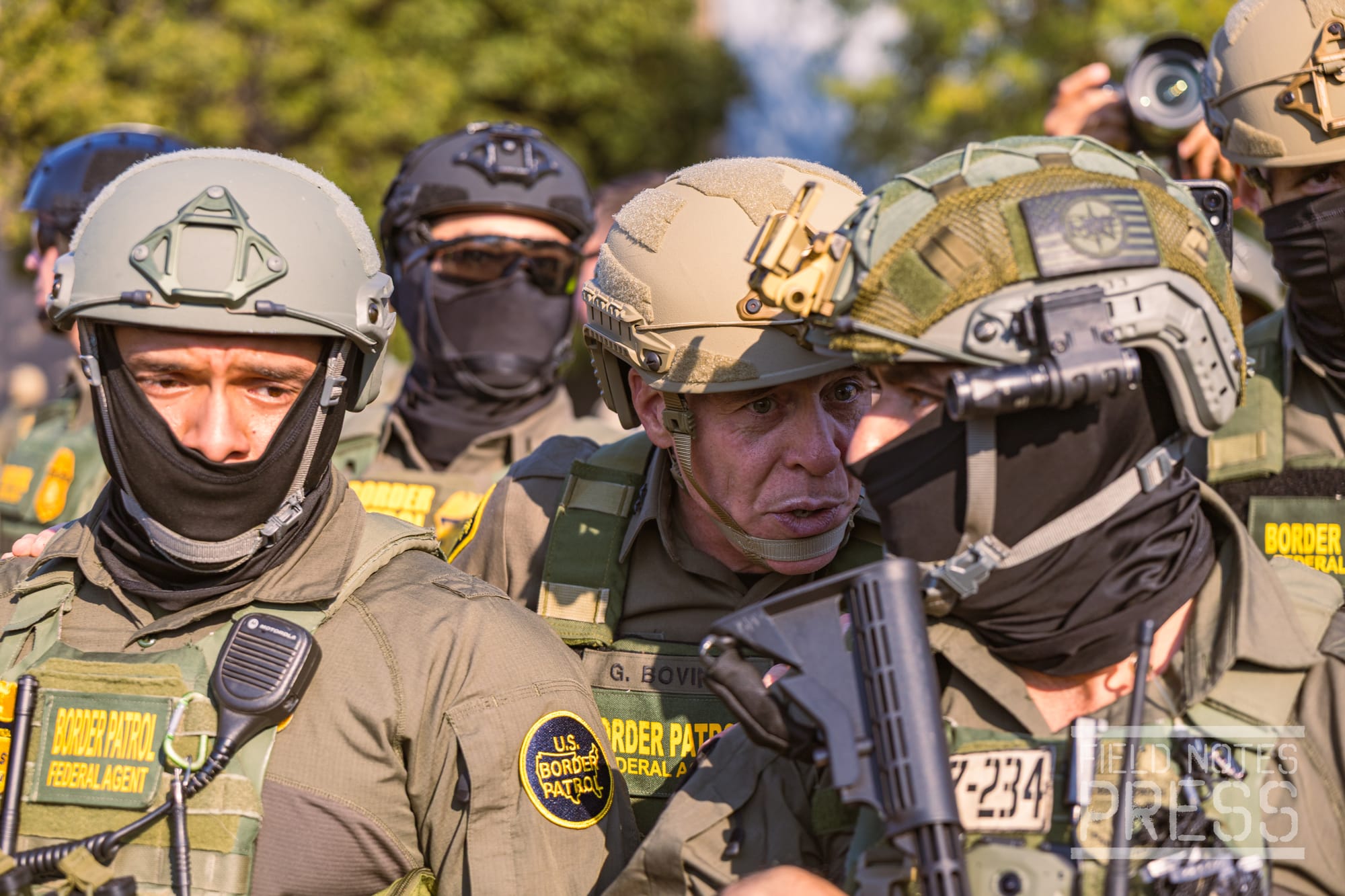
And the show went on. In mid-September, Bovino and his squad of acolytes were caught on video shooting a Presbyterian minister in the head with "less-lethal" weapons during a prayer vigil. On October 3rd, Bovino personally led dozens of agents from ICE, Border Patrol, ATF, and even federal prison guards in an attack on a peaceful protest and interfaith prayer vigil near the Broadview, Illinois ICE facility. Complete with DHS videographers and cinema drones flying overhead, the unprovoked attack gave the appearance of being staged for social media engagement, not actual law enforcement.
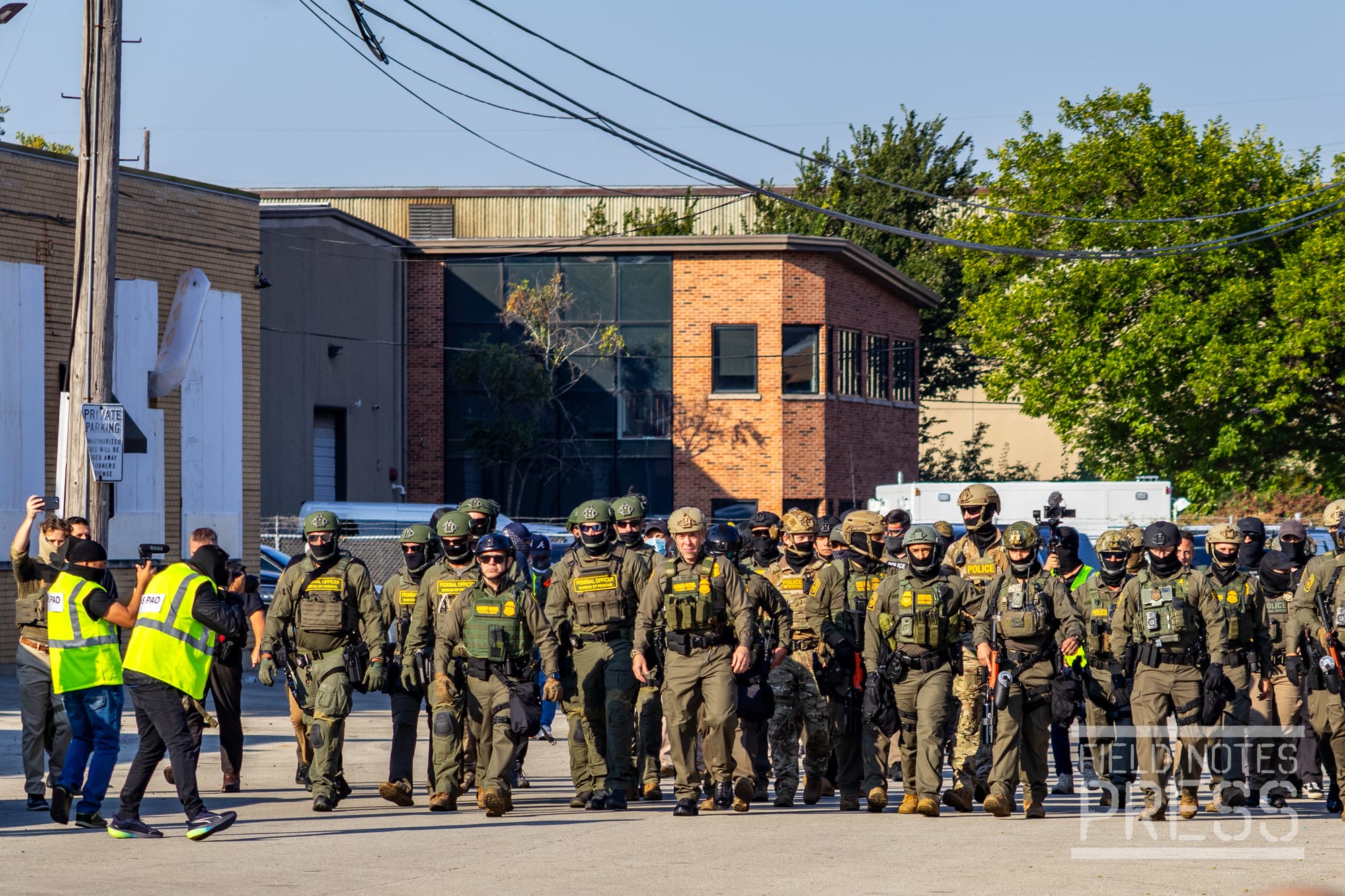
Bovino would continue to move through Chicago in tactical gear, unmasked, often the only face visible in a sea of helmeted agents in full battle-rattle more appropriate for a battlefield than an American city. He spoke to reporters on the ground. He gave appearances on Fox News. He engaged with protesters who followed and tracked his path of violence. And on October 23, 2025, in the Little Village neighborhood, something happened that would follow him for the rest of his career.
Confronted by protesters, Bovino threw a tear gas canister, and then another, at a crowd that was already fleeing and posed no threat. No warning was issued. He publicly claimed he had done so because he was struck in the head by a rock.
He was not, in fact, struck in the head by a rock.
In a deposition given under oath, Bovino admitted he had not been hit before deploying the first canister. He gave conflicting accounts across three days of testimony — at one point saying a rock "did not hit me in the head, but it did almost hit me," at another point acknowledging he had been "mistaken" and had deployed the gas before any rock was thrown. He also denied, on the record, tackling a man outside the Broadview ICE facility. Video showed him tackling the man.
On November 6, 2025, U.S. District Judge Sara Ellis — appointed to the federal bench by Barack Obama in 2013 — issued a sweeping 233-page preliminary injunction. She had seen the body camera footage. She had reviewed Bovino's deposition. She read her ruling from the bench for nearly ninety minutes.
"Defendant Bovino admitted that he lied," she said.
She found that federal agents had repeatedly used force that "shocks the conscience." She found that agents drove erratically and brake-checked other motorists to manufacture pretexts for deploying force. She found that one agent had used ChatGPT to write an incident report from a one-line prompt and a few images. She found that official write-ups labeled "neighborhood moms and dads, Chicago Bears fans, people dressed in Halloween costumes, and the lawyer who lives on the block" as "professional agitators." She concluded: "Every minor inconsistency adds up, and at some point, it becomes difficult, if not impossible, to believe."
To open her order, she read Carl Sandburg's poem "Chicago" in full. To close it, she quoted John Adams: "Liberty once lost will be lost forever."
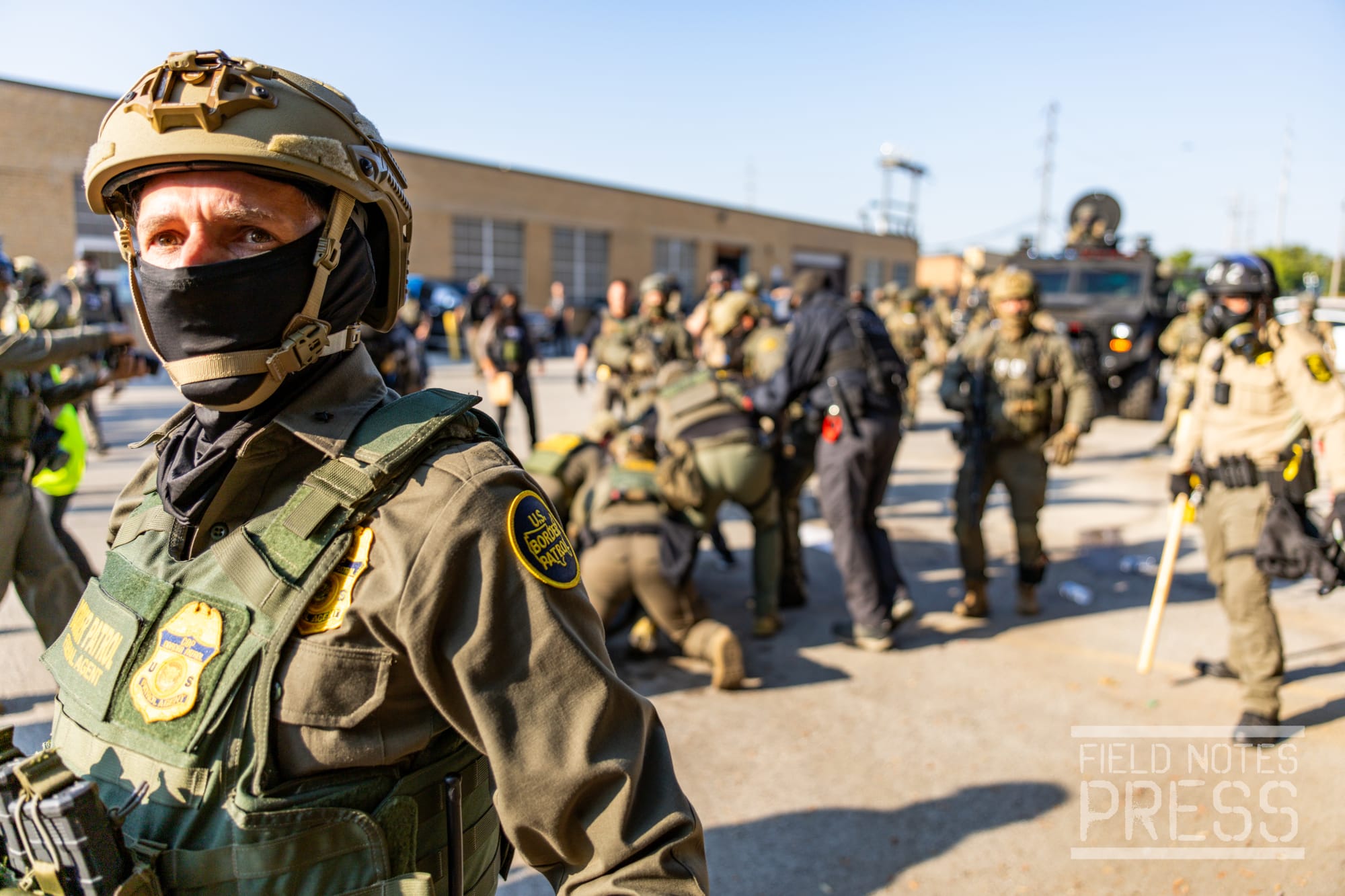
The Department of Homeland Security called her an "activist judge." Government attorneys appealed. The 7th Circuit blocked portions of her order while the case proceeded. But the finding stood in the record: a sitting federal law enforcement commander had admitted, under oath, that he lied.
Despite the fact that at any other time in history, a finding of perjury against a law enforcement agent would effectively end their career, Bovino continued immigration operations in Chicago and beyond.
Act Seven: Minneapolis
In December 2025, Bovino arrived in Minnesota to lead what the Department of Homeland Security called its largest-ever domestic immigration enforcement effort: Operation Metro Surge. Roughly three thousand federal agents flooded Minneapolis and St. Paul for an operation that explicitly targeted Minneapolis' large Somali American community, as well as heavily Latino neighborhoods. Trump had publicly referred to Somali Americans as "garbage." Minnesota Governor Tim Walz would later call what followed a "campaign of organized brutality."
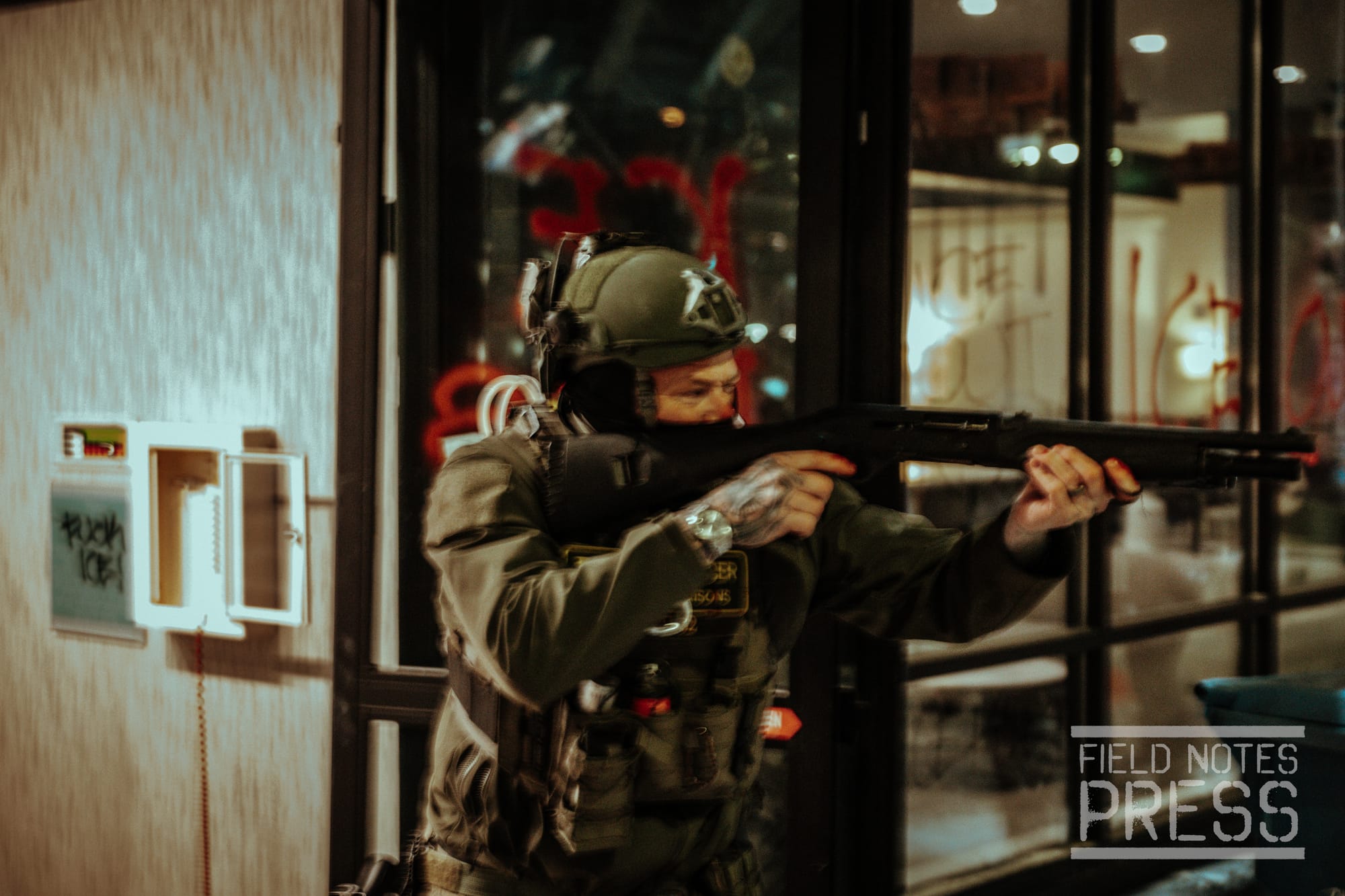
On January 7, 2026, Renee Nicole Good, a thirty-seven-year-old woman observing an enforcement operation, was shot and killed by an ICE agent as she attempted to drive away from agents during an operation. Already a powder keg of rage from the violent tactics residents witnessed being perpetrated against their neighbors, the shooting lit the city off in a way that hadn't been seen since George Floyd was murdered in 2020. Protests intensified. Networks of digital rapid responders coordinated to disrupt operations. Teachers organized with parents. Workers and businesses refused to serve federal agents.
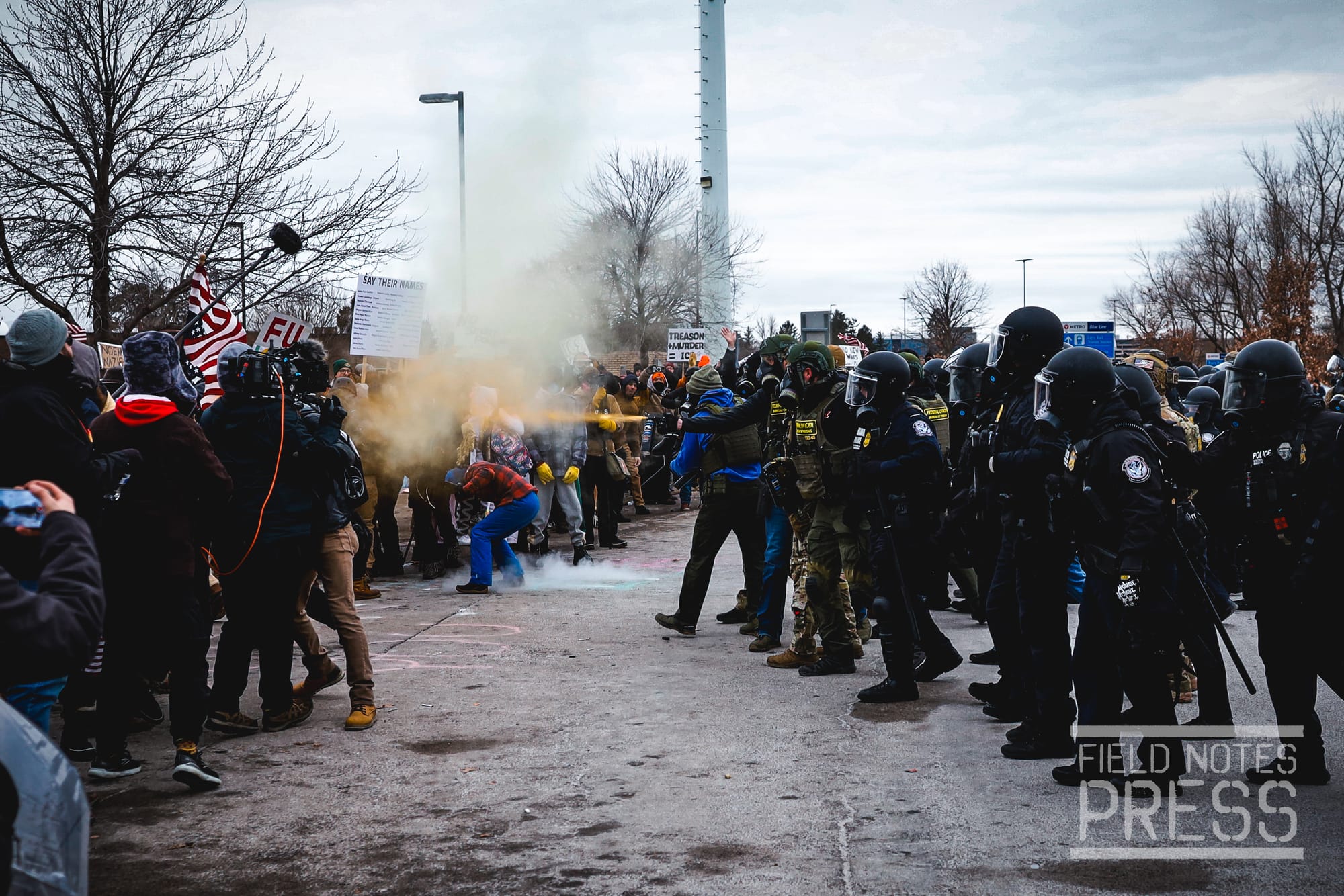
Bovino stood next to Kristi Noem at a press conference and defended the agent who killed Good, while other administration officials characterized her and other Minnesota residents who had been injured or killed by agents as "domestic terrorists". The operation continued.
On January 24, a mere seventeen days after Good's murder, Alex Pretti, a thirty-seven-year-old ICU nurse who worked at the Minneapolis VA hospital, went to a street in the Whittier neighborhood to observe and film immigration enforcement activity in his community. A lawful gun owner with a permit to carry in Minnesota and no criminal record beyond traffic tickets, Pretti was seen in videos from the scene holding a cell phone and directing traffic.
At that scene, federal agents were attempting to detain an alleged undocumented immigrant who had entered a nearby doughnut shop. When shop employees locked the doors, agents turned their attention to the crowd gathering outside.
As seen in bystander video, one of the agents shoved a woman standing near Pretti, who moved to help her. Another agent then pepper-sprayed him, before multiple agents tackled him to the ground. One agent, in a gray jacket, reached into the scrum and removed a gun from Pretti's waistband, walking across the street holding it. A second later, with Pretti pinned to the ground and surrounded by approximately six agents, he was shot multiple times by at least two agents and died at the scene.
Bystander video from multiple angles — verified independently by Reuters, the BBC, the Wall Street Journal, and the Associated Press — showed Pretti holding a phone, not a gun. The videos showed officers approaching Pretti, not the reverse. The videos showed the gun being removed from his body before the shots were fired.
Within hours, before Pretti's parents had even been notified of their son's death, the Department of Homeland Security posted a photograph of the recovered 9mm handgun on X (née Twitter). "This looks like a situation where an individual wanted to do maximum damage," the post read, and a statement later reiterated at a press conference by then-DHS Secretary Kristi Noem. Deputy White House Chief of Staff Stephen Miller called Pretti a "domestic terrorist" and a "would-be assassin." FBI Director Kash Patel said: "You do not get to attack law enforcement officials in this country without any repercussions."
At a press conference later that afternoon, Gregory Bovino stood before cameras and said: "This looks like a situation where an individual wanted to do maximum damage and massacre law enforcement."
Pressed by CNN anchor Dana Bash the following day for evidence that Pretti had been assaulting agents or brandishing his weapon, Bovino said: "Dana, let's not freeze-frame adjudicate this now."
The investigation, he said, would uncover the facts.
Minnesota authorities obtained a search warrant for the scene, but were blocked from executing it by federal agents. A pediatrician bystander filed a court declaration stating that when she reached Pretti's body, none of the agents surrounding him were performing CPR — they appeared, she said, to be counting his bullet wounds. Minneapolis Mayor Jacob Frey said he watched the video and saw "more than six masked agents pummeling one of our constituents, shooting him to death." Governor Walz said: "I've seen the videos, from several angles, and it's sickening."
Use-of-force experts who reviewed the footage for the Associated Press found no evidence supporting Bovino's claim that Pretti intended to massacre law enforcement. Former acting DHS undersecretary for intelligence John Cohen told ABC News: "What the videos depict is that this guy did not walk up to anybody from CBP in a threatening manner."
Bovino held a second press conference and declared: "The victims are the Border Patrol agents."
Act Eight: The Curtain Falls
According to reporting by multiple outlets, Trump watched the footage from Minneapolis and grew "increasingly disturbed" by the chaos. At the urging of White House Chief of Staff Susie Wiles and pressure from allies, he agreed to a reset. He reportedly spoke to Governor Walz and Mayor Frey. He told Frey, according to the mayor, that "the present situation cannot continue."
On January 26, 2026 — just two days after Pretti's death — the Trump administration privately moved to relocate Bovino out of Minneapolis. The Atlantic reported he had been dismissed as Commander-at-Large and would return to his old posting in El Centro, California. The Department of Homeland Security denied he had been relieved: "Chief Gregory Bovino has NOT been relieved of his duties," DHS spokesperson Tricia McLaughlin posted on X.
He left Minneapolis anyway. Tom Homan, Trump's hand-picked "border czar," was announced as Bovino's replacement. The arrival of a man with decades of experience in building deportation infrastructure and leading immigration enforcement under multiple administrations, one who deported nearly a million people during his tenure at ICE under presidents Obama and Trump, implied a clear message: Bovino's approach had generated a problem that required a different kind of manager.
Bovino returned to El Centro to resume duties as sector chief — the same position from which he had been relieved under Biden two years earlier.
Hennepin County Attorney Mary Moriarty recently announced that her office was investigating at least seventeen potential crimes by federal agents during Operation Metro Surge. At least one incident under investigation involved Bovino directly: a January 21 encounter in which he was seen deploying a chemical agent into a crowd of protesters near Mueller Park. Moriarty said she was "confident" her office would be able to pursue charges in the shooting deaths of both Good and Pretti.
The show that had toured from Bakersfield to Los Angeles, from Chicago to Charlotte, from New Orleans to Minneapolis, was over. The star had been sent back to the desert.
Epilogue: What the Show Was For
Bovino had once said that after reaching the mandatory retirement age of fifty-seven, he planned to return to North Carolina to harvest apples.
There is something almost novelistic about that image — the man who patrolled American cities on horseback, who soundtracked his operations with rap music, who stood before cameras and declared law enforcement to be the true victims after murdering citizens, returning quietly to the mountains of western North Carolina to pick fruit alongside the same kind of workers his agents had been sweeping up in parking lots and highway shoulders across California.
But the story resists easy irony. The more useful question is not what Bovino thought he was doing — he appears to have believed, with genuine conviction, that he was the good guy, the hero his childhood self had longed to see on screen — but what the administration was doing with him.
Bovino's utility to the Trump project was never primarily operational. The numbers told that story clearly enough. Operation Return to Sender arrested 78 people, 77 of whom had no prior record with the agency. The Los Angeles operation, for all its spectacle, was producing arrests at a rate, as PBS NewsHour noted, that would never come close to the mass deportation numbers Trump was promising. The Chicago raids were ruled to be based on fabricated evidence, conducted in violation of a court order, and led by a commander who admitted under oath that he had lied.
What Bovino produced, reliably and at scale, was footage. Press conferences. Viral moments. A clear visual grammar of federal authority being reasserted in cities that had resisted Trump; a grammar that spoke directly to the hardest-core of the MAGA base, which wanted to see something being done even more than it wanted to see anything accomplished.
He was, as one former ICE official told Newsweek, trying to build a brand. But the brand was also the administration's brand, and it served the administration's purposes. When a federal judge found that his agents had labeled ordinary Chicago families as gang members in official reports, when it emerged that incident reports were being generated by ChatGPT, when video after video contradicted the official account of what his agents had done in Minneapolis, the administration stood beside him. DHS called the federal judge an "activist." Stephen Miller called Alex Pretti a domestic terrorist before his family had been notified of his death.
Bovino was only removed when the show itself became the problem, when the footage coming out of Minneapolis was no longer the footage the administration needed. Two American citizens dead in three weeks. A general strike in Minnesota. A Republican lawyer running for governor who withdrew from the race because he could no longer support his own party. The International Association of Chiefs of Police calling for emergency talks. Even some Republicans uneasy about the Second Amendment implications of a licensed gun owner being killed while his weapon remained in his waistband.
Trump didn't remove a lawman who had gone too far. He replaced a showman whose show had turned on him.
In the final accounting, what Gregory Bovino leaves behind is not a transformed immigration enforcement landscape but a series of federal court rulings, criminal investigations, and a body of bystander video that will outlast the operation names and the social media posts. Operation Return to Sender: ruled likely unconstitutional. Operation Midway Blitz: its commander found to have lied under oath. Operation Metro Surge: seventeen incidents under criminal investigation, including two American citizens shot dead.
The movie that eleven-year-old Gregory Bovino couldn't stand was one where the Border Patrol agents were the bad guys. He spent his career trying to make a different movie, but instead became the same kind of villain that he so desperately despised.